1st of August Speech: 10 Tips to succeed
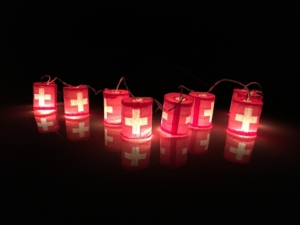 Soon the time will come again: all over Switzerland countless speakers will give a speech because of the 1st of August. The 1st of August is the Swiss national holiday. Hence there is the tradition of giving a 1st of August speech. I feel this is a worthwhile tradition, because giving a speech is always an opportunity to share a message. When else can you share your thoughts (more or less) undisturbed with a larger crowd?!
Nevertheless, it is clear to most people: you can’t please everyone. Matthias Aebischer, Swiss journalist, presenter and politician, put it beautifully in one of his speeches: “A 1st of August speech that is not criticized afterwards is like a meal in the canteen that you can’t complain about”.
For the complaints not to turn out too harsh, I have collected 10 (not conclusive) tips for a successful 1st of August speech.
Tip 1: Preparation is half the battle.
1st of August speakers are usually asked a long time in advance to speak. If you are the lucky one, do a small written brainstorming and complete the initial ideas from the brainstorming over time. Subsequently you will no longer be starring at a white sheet of paper on July 31.
Tip 2: Anyone who cannot hear you becomes a disturbing factor.
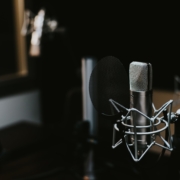
I have often experienced that the organizer skimped on the sound system or didn’t have one at all. Unfortunately I therefore could hardly hear the speaker. It only takes a few audience members to start whispering to each other and you then don’t hear anything anymore. Therefore, make sure that the audience can hear you. With more than 40 listeners I recommend you use a microphone. Preferably a lapel microphone or a headset.
Tip 3: The beginning should make them want more.
Start in such a way that the audience will pay attention to you right from the start. This can be achieved, for example, during the greeting. Instead of a plain “Dear ladies and gentlemen”, start with a personal anecdote. Then only greet the audience.
Tip 4: Choose the content so that it suits you, the occasion and the audience.
Why not talk about Switzerland? After all, it’s Switzerland’s birthday. As Switzerland is very diverse, you can really choose any topic. Nevertheless, make sure you are clear about your main message. A possible formula for the content is: a personal anecdote, the story of someone else and what you have learned from it. Especially with the personal anecdote you make your speech memorable.
Tip 5: The end is the icing on the cake.
Prepare a crisp ending. “Thank you for your attention.” is not one of them. Instead, you can summarize, relate to the beginning and/or make a call to action. The brave ones bring a suitable joke at the end. It is best to practice the last sentence several times out loud beforehand.
Tip 6: You need a clear goal in mind.
Decide on a clear main message. You are welcome to repeat the main message several times. Your main message could refer to a virtue, e.g. courage, punctuality, reliability, love, perseverance. How about “The world belongs to the brave”, “Steady wins the race” or “I am proud of Switzerland”?
Tip 7: Variety makes life sweet.
A speech that’s serious as hell won’t knock anybody off their pedestal. Switch between seriousness and lightness. If you manage to get your audience to laugh, then that’s a bonus. In addition, it is worth researching what others have already said many times before. You can do without it or on the contrary: It is so important to you that you also want to repeat it.
Tip 8: Speak so that you are understood.
Analyze the audience. Then decide whether you will give the speech in Swiss German or High German (or any other language). If you choose a language that is not your mother tongue, you should practice your speech particularly often. For example, most Swiss-German speakers find it more difficult to speak High German than Swiss-German.
Tip 9: Keep it simple, stupid.
Mark Twain said: “A good speech has a good beginning and a good end – and both should be as close together as possible.” Ask the organizer how much time you have. Many times you will get 10 – 15 minutes. If you are writing a manuscript, you know how many words it should contain. Namely: If you speak at a speed of 100 words per minute, your manuscript will contain 1’000 – 1’500 words.
Tip 10: Tell them who you are.
The audience is curious. They want to know who’s talking to them. Tell them. However, I recommend you spice it up. Don’t just enumerate what you have done in the past, but use a story to talk about yourself. For example, I could tell you how I can still remember how I grew up in Lucerne next to the Museum of Transport and what I experienced in the course of it all. Thus, the listeners casually learn who I am.
If you stick to these tips, you are already one big step closer to a 1st of August speech that will be positively remembered. I wish you every success.
If you like the blog article, share it in social media like Facebook, XING and Co.